Category: CIO insights

  • CIOs: understanding your IT system through 3D

    CIOs: understanding your IT system through 3D

    3D IT monitoring for CIOs

    In the constantly evolving world of technology, companies’ information systems (IS) have become increasingly complex to control and maintain. CIOs face growing challenges, notably due to geographically scattered resources, poorly documented changes, the specific technical skills required for each IS element and an ever more complex network mesh.

    Yet mastering the IS is imperative for CIOs, as it underpins optimization and security projects, the management of technical teams and accurate reporting to executive management.

    3D mapping: an understandable view of the IT infrastructure

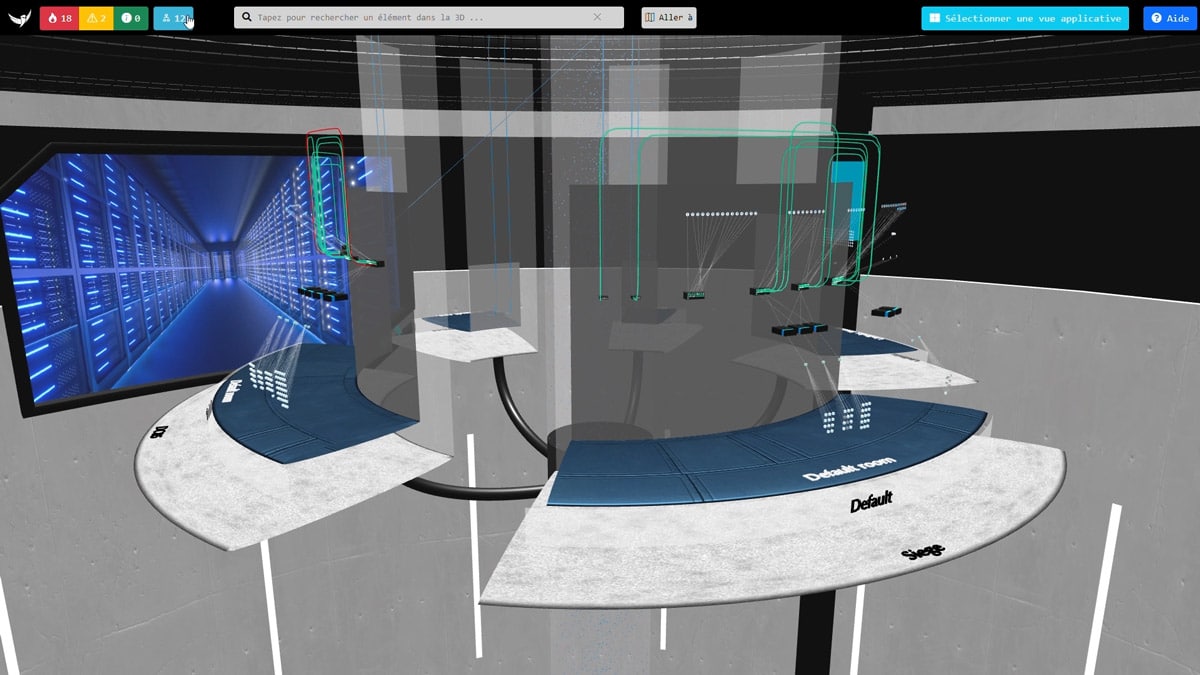
    3D mapping offers CIOs a whole new perspective on IT monitoring. Imagine exploring your IS in three dimensions, moving virtually between sites and rooms without leaving your desk. This visual representation models the IS in an understandable way, even without in-depth technical knowledge. It provides a first level of analysis by making potential points of failure or optimization visible.

    Keeping your map always up to date

    Unlike traditional monitoring solutions based on manual maps, 3D mapping automatically detects and models IS elements and the network topology. This approach eliminates the risks of outdated information, limited completeness and potential errors. With a constantly up-to-date view of your infrastructure, you can make informed decisions based on accurate information.

    Easier interaction with all stakeholders

    One of the key characteristics of 3D network mapping and IT monitoring is accessibility. This innovative approach is no longer reserved for technical experts. You can now share a logical, understandable view of your infrastructure with all stakeholders, technical or not.

    The 3D interface makes navigating the IT environment simple and avoids getting lost in complex details. This smooth interaction strengthens collaboration between teams, improves communication and keeps business goals aligned.

    Visually detecting weak points to strengthen infrastructure security

    3D network mapping and IT monitoring are much more than three-dimensional images. They give CIOs a key advantage: the ability to visually detect weak points in the information system. You can zoom in on every component of your network and analyze connections, servers, security equipment and much more in detail. This early detection lets you quickly identify non-redundant critical elements, sub-optimal configurations and potential bottlenecks.

    You can then implement corrective measures before these problems turn into major incidents, ensuring maximum availability of your infrastructure.

    Strengthening dialogue with your technical teams

    3D IT monitoring opens up new opportunities for communication with your technical teams. Thanks to this immersive visual representation, you can better grasp operational realities and understand the technical challenges your teams face.

    This approach makes communication much easier and encourages fruitful discussions about possible optimizations. You can share your observations on system performance, spot opportunities for improvement and work closely with technical experts to implement the best solutions.

    3D IT monitoring and network mapping open new perspectives for CIOs, enabling them to know, understand and monitor their infrastructure like never before. This approach fosters collaboration with all stakeholders and enables early detection of vulnerabilities. So take the leap and discover a world of possibilities that will help you strengthen the stability of your infrastructure for the future.

    3D mapping turns complexity into clarity, putting the power of understanding in your hands: the hands of the visionary CIO.
    Strengthening dialogue with your technical teams – Shwett

    Create your 3D map in 1 click

    Deploy the SHWETT probe and start monitoring and managing your infrastructure from a unified 3D view.
    Free 14-day trial.
  • Disaster recovery and business continuity: why monitoring matters

    Disaster recovery and business continuity: why monitoring matters

    Monitoring for business continuity

    In the digital age, companies rely heavily on their IT infrastructure to support critical operations and deliver products and services to their customers. Any disruption or unavailability of IT systems can have serious consequences, leading to financial losses, reputational damage and customer dissatisfaction. This is where the importance of IT monitoring for business continuity becomes clear.

    IT monitoring consists of continuously observing and analyzing an organization’s IT infrastructure, including servers, networks, databases, applications and other components. It provides real-time visibility into the health, performance and security of these systems, enabling proactive detection and resolution of problems before they become major.

    Anticipating incidents that could affect information system availability

    IT monitoring enables organizations to detect and address problems at an early stage. By monitoring critical performance indicators such as CPU usage, memory usage, network latency and application response times, IT teams can identify anomalies, bottlenecks and potential failures. Early detection enables proactive resolution, minimizing the impact on business operations and avoiding costly downtime.

    Solving problems proactively

    With real-time IT monitoring, IT teams get immediate visibility into system performance and can take proactive steps to resolve issues. Alerts and notifications triggered by the monitoring solution inform IT staff of critical events so they can react quickly. Proactive problem resolution reduces downtime, improves operational efficiency and increases the company’s overall productivity.

    Improving information system performance

    IT monitoring provides valuable insight into system performance, helping organizations optimize their IT infrastructure. By analyzing trends and patterns over time, IT teams can identify performance bottlenecks, resource limitations or areas needing optimization. This lets them make data-driven decisions, allocate resources efficiently and tune the IT environment for optimal performance and stability.

    Strengthening IT infrastructure security

    IT monitoring is essential for robust cybersecurity. Security breaches and cyberattacks can disrupt business operations, compromise sensitive data and damage a company’s reputation. IT monitoring solutions can watch network traffic, log files and security events, enabling the detection of suspicious activity or unauthorized access attempts. By identifying and responding quickly to security threats, organizations can reduce the risk of data breaches and protect their critical assets.

    Planning for additional resources

    IT monitoring provides insight into resource usage trends, allowing organizations to plan future capacity and scalability needs. By analyzing historical data and forecasting growth patterns, IT teams can identify when additional resources or infrastructure upgrades will be needed. This proactive approach to capacity planning ensures IT systems can cope with growing demand, support business growth and avoid performance degradation due to resource constraints.

    IT monitoring is an essential part of business continuity and disaster recovery strategies. By continuously monitoring critical systems, organizations can identify vulnerabilities and put measures in place to reduce the impact of potential disruptions. In the event of an outage or disaster, IT monitoring makes it possible to quickly identify affected systems, supports recovery efforts and helps restore business operations with minimal downtime.

    Planning for additional resources – Shwett

    Create your 3D map in 1 click

    Deploy the SHWETT probe and start monitoring and managing your infrastructure from a unified 3D view.
    Free 14-day trial.
  • CIOs: how to assess the TCO of an IT monitoring solution

    CIOs: how to assess the TCO of an IT monitoring solution

    Estimating TCO and ROI

    As a Chief Information Officer (CIO), choosing an IT monitoring solution is a crucial strategic task to ensure the performance, stability and security of your company’s information system.

    Beyond features and quality, assessing the total cost of ownership (TCO) is a decisive factor in making an informed decision.

    What is the TCO of a monitoring solution?

    TCO, or total cost of ownership, is the sum of all expenses related to acquiring, implementing, maintaining and evolving an IT solution over its lifetime. It goes far beyond the initial license cost and also includes hidden costs such as deployment fees, human resources, upgrades, hardware costs and much more.

    By assessing the TCO of an IT monitoring solution, you can determine whether the investment pays off in the long term and meets your company’s specific needs.

    What should you include in the TCO calculation?

    1. Person-time: setting up and deploying a monitoring solution can require considerable human resources. Make sure you account for the time and skills needed for initial installation, staff training, day-to-day management and subsequent updates.
    2. License costs: license costs can vary with the size of the infrastructure, the number of users and the monitoring scope. Make sure you understand how these costs change as your company grows.
    3. Hardware costs: some monitoring solutions require dedicated servers or specific hosting. Assess the costs of the hardware infrastructure needed to run the solution.
    4. Maintenance and evolution costs: software updates, new features and changes to the information system lead to additional costs. Make sure you understand how these costs will be handled as your needs evolve.
    5. Impact on IS availability: a complete TCO must also consider the monitoring solution’s impact on information system availability. A proactive solution can reduce downtime and improve the user experience, which directly affects productivity and profitability.
    6. Training and support: make sure you account for the cost of training staff to use the solution and any technical support fees.

    How do you calculate the long-term ROI of monitoring software?

    To assess TCO comprehensively, it is essential to consider long-term return on investment (ROI). A higher initial investment can pay off if the monitoring solution generates significant savings over time. Here are some factors to consider when calculating ROI:

    1. Less downtime: a proactive monitoring solution helps detect and resolve problems quickly, reducing costly downtime.
    2. Higher productivity: better IT monitoring can improve IT team efficiency, letting them focus on higher-value tasks.
    3. User experience: effective monitoring ensures a smooth user experience, which can positively affect customer satisfaction and loyalty.
    4. Collaboration and decision-making: a unified monitoring solution makes collaboration between teams easier, which can speed up decision-making and improve the company’s responsiveness to challenges.

    Choosing the right IT monitoring solution based on TCO

    Once you have a clear view of the TCO of each solution under consideration, it is time to make an informed decision.

    Choose an IT monitoring solution that not only meets your company’s specific needs but also offers an advantageous long-term TCO.

    A careful TCO assessment will help you make the best choice for your company, ensuring your investment in IT monitoring pays off and contributes to the success of your information system.

    Choosing the right IT monitoring solution based on TCO – Shwett

    Create your 3D map in 1 click

    Deploy the SHWETT probe and start monitoring and managing your infrastructure from a unified 3D view.
    Free 14-day trial.
  • Choosing a monitoring solution: 6 points not to overlook

    Choosing a monitoring solution: 6 points not to overlook

    How to choose the right IT monitoring solution

    Monitoring is essential to keep a company’s information system running and available. Choosing the right monitoring solution is therefore crucial.

    Yet the sheer number of offers does not make things easy for CIOs and technical teams looking for a monitoring solution that gives them a clear, accurate and up-to-date picture of their IT infrastructure.

    In this guide, we present 6 essential points not to overlook when selecting your monitoring solution.

    1. Granular readability: from macro to micro level

    An effective monitoring solution must be readable by both management (C-level) and operations teams. It must let you move from an overview of the infrastructure to a detailed view of individual elements. Decision-makers get a strategic view of the information system, while operations teams can quickly identify specific problems.

    2. Addressing the challenges of different profiles

    The monitoring solution must take into account the specific challenges of the different profiles within the company. This includes infrastructure (inventory, dependencies, uplinks, etc.), user support (alerts, bandwidth, resource usage, etc.), business applications (application chains, web services, etc.) and security. A holistic solution covering these areas will meet the needs of each profile.

    3. Controlling TCO (Total Cost of Ownership)

    When choosing a monitoring solution, it is important to consider the total cost of ownership. This includes the time and resources needed to deploy, maintain and evolve the solution. License costs, depending on the size of the monitored infrastructure, the monitoring scope and the number of users, must also be considered, as well as hardware costs such as servers or hosting. An in-depth TCO analysis will help you assess the long-term profitability of the solution.

    4. Agile, seamless evolution

    A monitoring solution must be able to keep up with changes in the information system in real time. Whether adding new assets, integrating new applications or expanding to new sites, the chosen solution must be flexible and update the system map in real time. Visio diagrams or traditional mapping tools that require manual updates are obsolete as soon as they are made and make troubleshooting laborious. Choose an automated solution that makes change management easier.

    5. Custom views

    Every company and every department has specific monitoring needs. The chosen solution must therefore offer customization features. You should be able to create specific views tailored to your company’s needs and to each department. Granular customization lets you choose the elements to monitor and exclude certain subnets if necessary. Make sure the solution offers this flexibility.

    6. Secure data access

    Data security is a crucial aspect of any monitoring solution. Make sure the solution offers guarantees regarding data hosting, online or offline. It is important to check whether the solution complies with current regulations and whether data remains accessible in the event of a network outage, so you do not depend entirely on the monitored system. Solutions based on the SaaS (Software as a Service) model can offer increased security. In addition, read-only access guarantees that data cannot be accidentally altered.

    Choosing the right monitoring solution is essential to ensure the availability and performance of your information system. By taking into account the points in this guide, you can select a solution suited to every profile in your company. Favor a holistic approach that covers the specific needs of your infrastructure, user support, applications, security and customization. By investing in the right monitoring solution, you will benefit from a long-term return on investment through better system availability, an improved user experience and easier collaboration.

    6. Secure data access – Shwett

    Create your 3D map in 1 click

    Deploy the SHWETT probe and start monitoring and managing your infrastructure from a unified 3D view.
    Free 14-day trial.
  • CIOs: understanding the challenges and risks of technical debt

    CIOs: understanding the challenges and risks of technical debt

    CIOs: understanding IT technical debt to manage it better

    IT technical debt is a major challenge for many IT departments in today’s companies.

    It is often the result of poor knowledge of the infrastructure, siloed IT teams and a lack of history or documentation.

    CIOs need to understand its mechanisms and risks in order to address it, control it and reduce its impact.

    What causes technical debt in IT departments?

    Lack of infrastructure knowledge

    A major challenge for CIOs is understanding the entire existing infrastructure. Companies change quickly, adopt new technologies and set up complex systems, which can make it hard to understand the infrastructure as a whole. This often leads to decisions based on incomplete knowledge, adding to technical debt.

    Siloed organization

    Siloed IT teams create barriers to communication and coordination. A lack of proper collaboration between teams often leads to redundancies, inconsistencies and conflicts between systems and applications. These unresolved issues turn into technical debt, making system maintenance and evolution more complex and costly in the long run.

    Lack of documentation

    A lack of history or proper documentation is another factor contributing to technical debt. When changes and updates are not properly recorded and documented, it becomes difficult for IT teams to understand how things have changed over time. This can lead to configuration errors, compatibility issues and difficulty diagnosing and solving problems. Inadequate documentation worsens technical debt and makes maintenance and error correction more laborious.

    What are the risks of technical debt for IT departments?

    Security risk

    Technical debt creates significant security risks. Obsolete systems, unapplied security patches and non-optimized configurations are potential entry points for attacks and data breaches. Cybercriminals often exploit known security flaws, leaving companies vulnerable if they fail to manage their technical debt effectively.

    Deteriorating user experience

    Technical debt can degrade the user experience. Systems and applications affected by technical debt may suffer frequent bugs, high latency and poor overall performance. This can hurt user productivity and satisfaction, with a negative impact on the business.

    Risk of production stoppages

    Obsolete, poorly maintained systems are more likely to suffer outages and failures, causing costly production interruptions. Prolonged downtime can lead to significant financial losses and damage the company’s reputation.

    Complex operations and maintenance

    Technical debt complicates operations and maintenance. When systems are not properly documented, updated and maintained, it becomes difficult for operations teams to guarantee their availability and proper functioning. This can delay problem resolution, lengthen response times and increase maintenance costs.

    Shadow IT

    Technical debt encourages shadow IT. When internal systems and applications do not meet users’ needs, users are tempted to look for alternative solutions not approved by the IT department. This creates additional security and compliance risks and further complicates the management of the company’s overall IT infrastructure.

    IT technical debt is a complex challenge for CIOs, with varied causes and significant risks. To avoid excessive technical debt, it is essential to invest in an in-depth understanding of the existing infrastructure, promote close collaboration between IT teams and put rigorous documentation and tracking processes in place. By managing technical debt effectively, CIOs can improve the user experience, strengthen security, minimize production interruptions, simplify operations and maintenance and eliminate shadow IT, contributing to the company’s overall performance.

    Shadow IT – Shwett

    Create your 3D map in 1 click

    Deploy the SHWETT probe and start monitoring and managing your infrastructure from a unified 3D view.
    Free 14-day trial.
  • IT monitoring: the 3 challenges facing IT teams

    IT monitoring: the 3 challenges facing IT teams

    IT professionals find the visibility offered by traditional monitoring solutions insufficient

    73%

    According to a study by the independent research firm Vanson Bourne, 73% of IT professionals surveyed consider the level of visibility offered by their IT monitoring solution to be insufficient.

    Challenge #1

    The new business orientation of IT departments

    IT infrastructure must be always on

    The information system is the backbone of your company. A service outage means that all or some of your employees cannot carry out their daily tasks. In industrial companies, manufacturing and/or shipping of goods comes to a halt. Such production stoppages inevitably cause financial losses for your company, greater or smaller depending on how long they last.

    When it comes to IT monitoring, a proactive strategy is now essential. Firefighting is no longer enough. The monitoring team, and the IT team at large, must be able to anticipate incidents and take the necessary measures before the company’s departments are affected.

    Your IT monitoring solution must therefore give you a global view of your IT infrastructure, updated in real time. The well-known “service weather” model offered by many IT monitoring solutions is no longer enough. From a centralized view, you must be able to detect any weak point in your information system within seconds, automatically, without manual searching or analysis.

    IT teams must focus on value-added tasks

    In today’s economy, time spent deploying, configuring or maintaining IT infrastructure or IT solutions has little value. All these low-value tasks must be automated. The real value of IT professionals lies in thinking, optimizing and leading projects related to the company’s digital transformation.

    Just like sales, marketing or operations, the IT department is now a real driver of the company’s competitiveness. Securing the IS against threats, shadow IT, improving the user experience and IoT are the real issues of the coming years.

    Your IT monitoring solution must therefore adapt to IT teams’ new challenges. It must be automated and intelligent:

    • Deployment should take only a few minutes.
    • Evolution should be automatic and seamless.
    • IS weaknesses should be visible at a glance.
    • An alerting system with automatic default thresholds should be available.

    Challenge #2

    The growing complexity of information systems

    A fragmented IT infrastructure

    Internationalization, disaster recovery plans, cloud usage, connected devices and more: IT infrastructures now span several sites, cities or even countries. It is therefore increasingly complex to get an exhaustive view of the elements that make up the information system, their links and dependencies. Yet a proactive approach to incident management requires access to a complete, clear map of the information system.

    Your IT monitoring solution must therefore automatically detect any new physical or virtual element of your IT system to maintain a complete inventory. You must also be able to see all the links between elements, their dependencies and the uplinks between switches and routers.

    So, when an incident affects a physical element (switch, router, hypervisor, etc.) of your IT infrastructure, your monitoring system displays the full list of dependent elements affected in a cascade.

    Challenge #3

    The talent shortage

    Difficulty recruiting IT profiles

    One of the main challenges facing IT departments is the difficulty of recruiting IT profiles that match their needs in terms of education, experience or specialization. It can take months before a position is actually filled, and significant training is often needed before new hires become autonomous. This trend is also set to grow in the coming years: IT is the sector expected to see the strongest growth in France (+26% job openings by 2030, according to a projection based on INSEE studies).

    Increasingly generalist profiles

    This shortage of specialized profiles is leading to more recruitment of junior or generalist profiles. The solutions used must therefore adapt to these new profiles by becoming simpler and more automated, so they are accessible to people without deep expertise. This trend has been visible for several years with the rise of no-code, hyperconvergence and, more recently, SASE (Secure Access Service Edge) for networking. One-click is becoming the new paradigm for managing the information system.

    Yet few IT monitoring solutions have adopted this new model. Legacy IT monitoring solutions still require a significant investment in person-time, notably because of overly complex deployments, configurations and analyses. The new generation of IT monitoring must break free from this complexity by offering IT teams a new, more immersive and intuitive experience.

    Discover Shwett, the new 3D IT monitoring solution

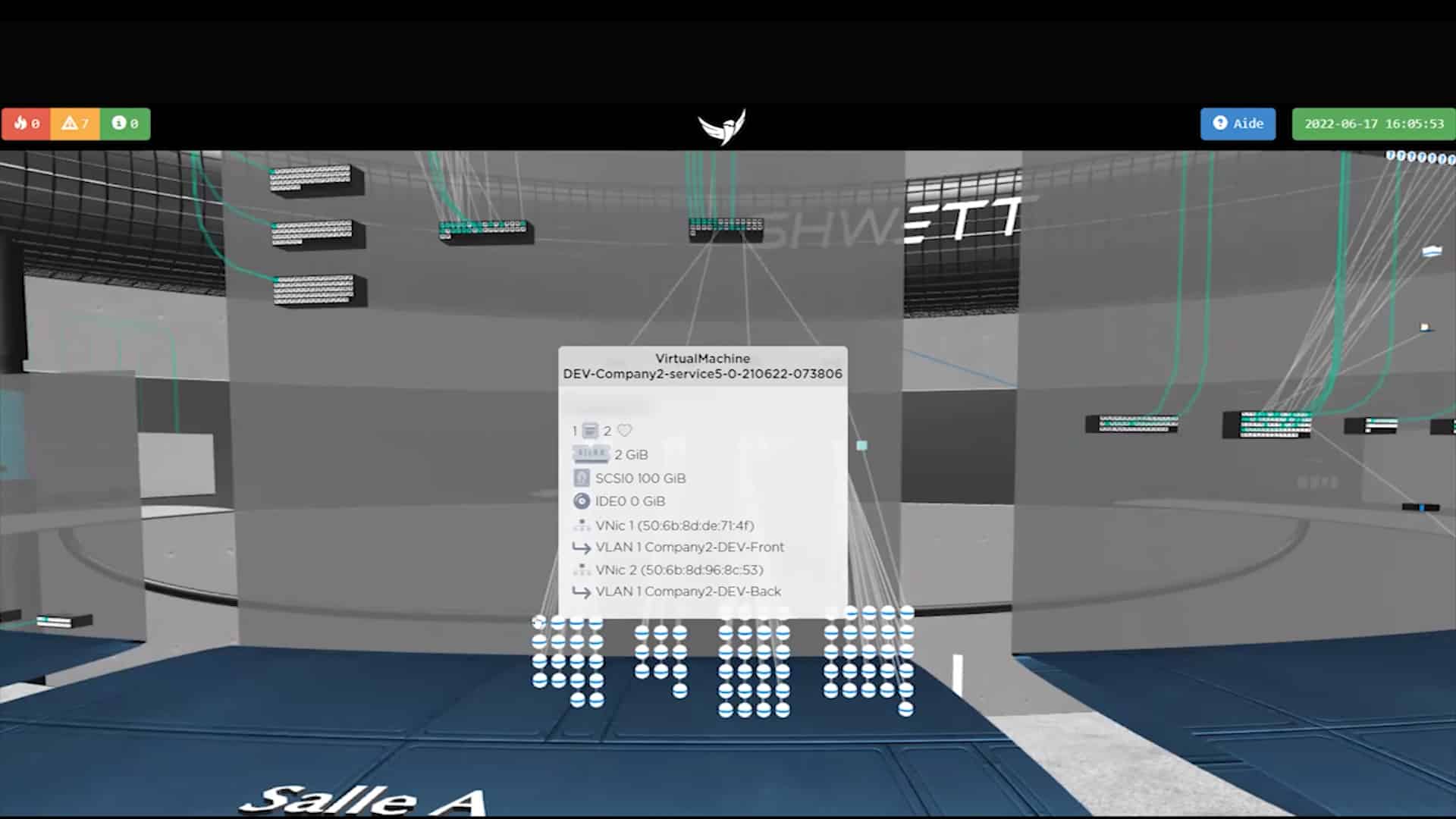
    Shwett shakes up existing IT monitoring models. The new IT monitoring solution gives you a unique view of your IT infrastructure modeled in 3D. Navigate your information system and detect SPOFs at a glance.

    Deploying Shwett takes just a few minutes. Are you ready for an immersive, intuitive monitoring experience?